

Farming
_002.jpeg)
The removal of insecticidal ear tags containing diazinon from the Australian market means it is vital that beef and dairy producers review their buffalo fly control programs to safeguard the efficacy of remaining chemistry.
THE removal of insecticidal ear tags containing diazinon from the Australian market means it is vital that beef and dairy producers review their buffalo fly control programs to safeguard the efficacy of remaining chemistry.
Elanco Brand Manager – Cattle, Kim Krilich, says there are now only two chemical groups available for long-term protection against buffalo flies: synthetic pyrethroids (SP) and macrocyclic lactones (MLs).
“Industry guidelines recommend rotating between different chemical groups within each season – and from year to year – to protect the efficacy of all available chemistry,” she says.
“Put simply, if you are intending to use an SP insecticidal ear tag this year, you should not apply a SP product as a knockdown during the ‘shoulder’ period before and after the peak fly season.
“Likewise, if you are intending to use an ML insecticidal ear tag, you should not use an ML product as a knockdown.
“And finally, whichever option you choose, make sure you rotate chemical groups next year according to the chemistry that is effective in your area.”
Kim says while resistance has been reported to all older chemical groups, they remain an integral part of buffalo fly control programs.
“Resistance can develop to any chemical if it is used continuously or if flies are exposed to sub-lethal amounts of insecticide,” she says.
“Common causes include underdosing, incorrect application technique or failing to remove insecticidal ear tags at the end of their pay-out period.
“However, it’s worth remembering that this is typically observed as reduced period of protection rather than as a complete ‘failure’ to control buffalo flies.
“The recent introduction of the isoxazoline chemical family provides a welcome alternative for the control of buffalo flies and cattle ticks, but it is not going to be a ‘silver bullet’.
“No single chemical group can be relied upon to provide season-long protection against any parasite, which means producers need access to multiple chemical groups.”
Buffalo fly (Haematobia irritans exigua) is the most economically-significant parasite in the Australian cattle industry, with lost production and treatment costs amounting to more than $171 million per year.1
These small, blood-sucking flies bite their host animal up to 40 times per day, mainly attacking the withers, shoulders, flanks and around the eyes.
Heavy infestations can cause intense irritation and discomfort, disrupting grazing and feed intake.
Even moderate pressure can reduce weight gain by 15 kg2 over the season or milk production by more than 0.5 L/day.3
Severe infestations can result in skin ulcers and reduced hide value caused by rubbing and lesions.
Buffalo flies can also be a vector for bacteria that cause diseases, such as pinkeye.
While selective breeding and non-chemical control methods can help to reduce fly numbers, the strategic and sustained application of chemical treatments remains the most effective way to manage buffalo flies.
“It is impossible to eradicate buffalo flies, so the goal is to manage the size of the population to minimise any negative impacts on animal welfare and productivity,” Kim says.
“Monitor fly pressure and begin treatment once more than 30 flies per dairy cow or 200 flies per beef animal are observed.
“Apply a knockdown treatment early in the season to suppress the build-up of the fly population and then apply an insecticidal ear tag to provide residual control during the peak season when fly pressure is greatest.
“A second knockdown treatment may be required at the end of the season if significant fly activity remains.
“Only use chemical groups that are known to be effective against local buffalo fly populations, and ideally, co-ordinate your buffalo fly control program with your neighbours to optimise resistance management.
“Make sure you record all chemical treatments applied during the season to assist with decision-making in the following year.”
Suitable knockdown options include Baymec® Pour-On for Cattle or Baymec® LV Pour-On, which control buffalo flies for up to 21 or 28 days, respectively, as well as controlling a range of other ivermectin-sensitive parasites.4
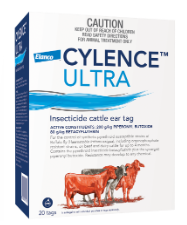
Long-acting insecticidal ear tags include Cylence™ Ultra, which protects beef and dairy cattle against buffalo flies for up to four months.4
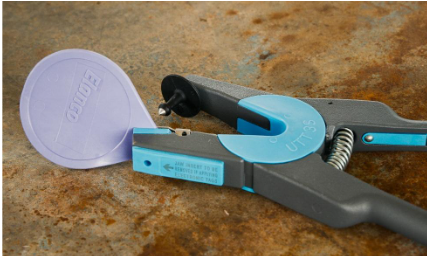
Cylence Ultra contains new-generation SP chemistry (80 g/kg betacyfluthrin and 200 g/kg piperonyl butoxide) in a two-tag system that ensures the fast and efficient spreading of the active ingredients.
References: 1. Shephard, R. et al. (2022). Priority list of endemic diseases for the red meat industry – 2022 Update. Meat & Livestock Australia. Report B.AHE.0327. 2. DAFF, QLD (2016) Production losses due to buffalo fly in cattle. www.daff.qld.gov.au. Accessed 17th August 2022. 3. Jonsson, N. & Mayer, D. (1999) Estimation of the effects of buffalo fly (Haematobia irritans exigua) on the milk production of dairy cattle based on a meta-analysis of literature data. Med Vet Entomol. Oct; 13(4):372-6. 4. Refer to registered labels.
©2025 Elanco or its affiliates. Baymec is sold by Elanco or its affiliates and is not a Bayer product. The Baymec trademark is owned by Bayer and is used under license. Cylence, Elanco and the diagonal bar logo are trademarks of Elanco or its affiliates. EAH25465. PM-AU-25-0595.
It’s important to always read and follow the label directions and ensure good agricultural practice is used for optimal buffalo fly control.
Contact your local Norco AgriSolutions store for further information about managing buffalo flies in beef and dairy cattle.